
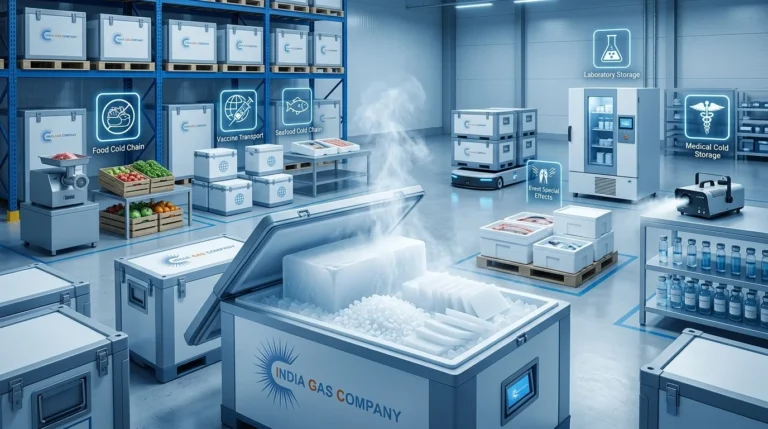

Dry Ice: the solid form of carbon dioxide that sublimates at a chilling -78.5°C, has quietly become one of the most versatile industrial materials in India. It doesn’t melt into a puddle like regular ice; it turns straight from solid to gas, leaving no residue behind. That single property has made it indispensable across pharmaceuticals, food exports, logistics, events, and manufacturing.
If you’ve ever searched for where to buy Dry Ice in India, you’ve probably noticed that the demand isn’t limited to one sector. Hospitals need it for vaccine transport, meat exporters need it for shipping consignments to the Gulf and Southeast Asia, ice cream makers need it for retaining texture during transit, and event planners need it for that dramatic stage fog.
This guide breaks down exactly how each industry uses dry ice, why it’s the preferred choice over regular ice or mechanical refrigeration, and how businesses across the country including those looking to buy dry ice in South India and buy dry ice in Bangalore can source it reliably.
What Makes Dry Ice Different From Regular Ice?
Before diving into industry-specific applications, it’s worth understanding why dry ice is chosen over water ice or gel packs in the first place.
- No Liquid Residue: Because dry ice sublimates directly into carbon dioxide gas, there’s no meltwater to damage packaging, contaminate products, or create a mess during transport.
- Extremely Low Temperature: At -78.5°C, dry ice is roughly 100 degrees colder than a standard home freezer, making it ideal for products that need deep-freeze conditions.
- Higher Cooling Density: A smaller volume of dry ice can absorb far more heat than the same volume of water ice, which matters when shipping space and weight are limited.
- Longer-lasting Cold Chain: Especially useful in India’s climate, where high ambient temperatures during transport (particularly across the southern and central states) can compromise sensitive cargo.
- Inert and Non-toxic: When handled correctly, dry ice doesn’t react with most products, making it safe for food, pharma, and industrial use.
These properties explain why so many businesses across India from pharma warehouses in Hyderabad to seafood processing units in Kochi are actively searching to buy Dry Ice in India on a recurring basis, not as a one-time purchase but as an ongoing operational necessity.
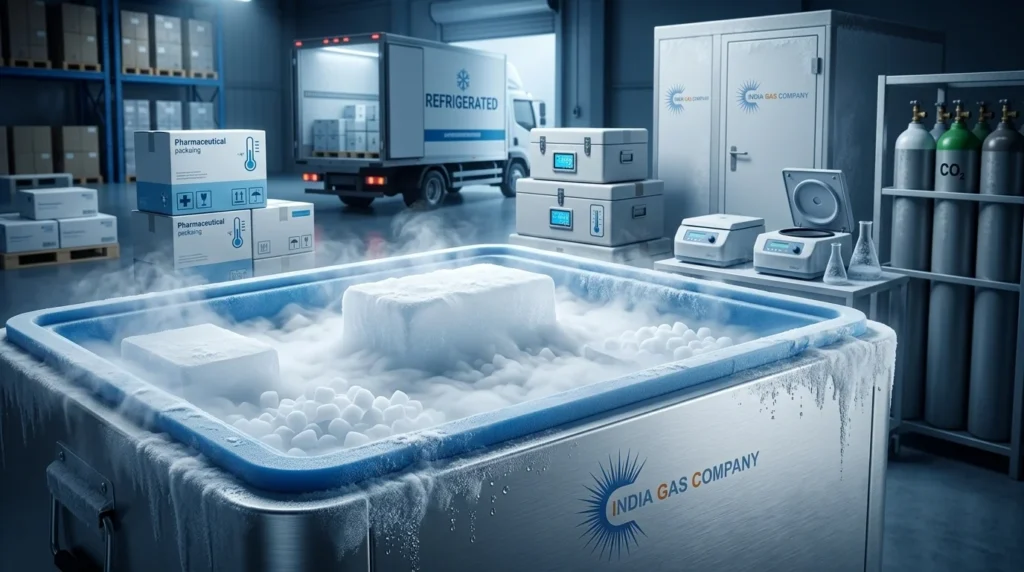
1. Pharmaceutical and Healthcare Industry
The pharmaceutical sector is arguably the single largest institutional consumer of dry ice in the country, and this demand accelerated sharply after the COVID-19 vaccine rollout exposed just how critical cold-chain logistics really are.
Vaccine and Biologics Transport
Many vaccines, monoclonal antibodies, and biologic drugs require ultra-cold storage sometimes as low as -70°C during transport between manufacturing sites, distribution hubs, and hospitals.
Dry ice is packed around insulated vaccine carriers to maintain this temperature range for hours or even days, especially for shipments moving across state lines where transit time can stretch due to traffic, customs checks, or last-mile delivery challenges in semi-urban areas.
Clinical Trial Sample Shipping
Contract Research Organizations (CROs) and Diagnostic Labs regularly ship blood samples, tissue biopsies, and clinical trial specimens between cities. These samples often need to remain frozen to preserve their diagnostic or research integrity.
Pharma companies and diagnostic chains headquartered in Bengaluru, Hyderabad, and Chennai routinely need to buy dry ice in South India because much of India’s diagnostics and biotech cluster is concentrated in this region.
Organ and Tissue Transport
While specialized cryogenic containers handle most organ transport, dry ice is sometimes used as a supplementary cooling agent for tissue samples, plasma, and other biological materials that don’t require the extreme cold of liquid nitrogen but still need to stay well below freezing.
Cold Chain for Rural and Semi-Urban Distribution
India’s pharma distribution network extends deep into tier-2 and tier-3 towns, where dedicated refrigerated transport isn’t always available. Dry ice packed into insulated boxes offers a practical, low-infrastructure solution for maintaining the cold chain on routes where refrigerated vans aren’t cost-effective for smaller volumes.
2. Meat, Poultry, and Seafood Export Industry
India is among the world’s largest exporters of buffalo meat, and its seafood export industry centered heavily around Andhra Pradesh, Kerala, Tamil Nadu, and Gujarat ships frozen shrimp, fish, and other marine products to dozens of countries. Dry ice plays a central role in keeping this trade viable.
Maintaining the Frozen State During Air Freight
Meat and seafood exports moving by air cargo (as opposed to slower sea freight) rely heavily on dry ice because flights don’t have the transit time buffer that ships do, but they also don’t always guarantee consistent freezer conditions in cargo holds.
Exporters pack consignments with dry ice to guarantee the product remains frozen solid from the processing plant to the destination airport.
Preventing Bacterial Growth and Spoilage
Meat and seafood are highly perishable and prone to bacterial growth the moment temperatures rise above freezing. Since dry ice maintains temperatures far below the danger zone for bacterial proliferation, it significantly extends the safe transit window compared to gel packs or regular ice.
Compliance With Export Standards
Countries importing meat and seafood from India including UAE, Saudi Arabia, Vietnam, and various EU nations have strict cold-chain compliance requirements under food safety regulations.
Using dry ice helps exporters demonstrate an unbroken cold chain, which is often a documentation requirement for customs clearance.
Regional Sourcing Needs
Since much of India’s seafood processing is based in coastal Andhra Pradesh, Kerala, and Tamil Nadu, seafood exporters frequently need to buy dry ice in South India, often in bulk quantities and on tight turnaround schedules tied to processing and shipment cycles.
Reliable local suppliers who can deliver dry ice in blocks or pellets, sized appropriately for packing crates, are essential partners for this industry.
3. Ice Cream, Frozen Desserts, and Dairy Industry
India’s ice cream and frozen dessert market has grown rapidly, driven by both organized dairy brands and a booming artisanal and D2C ice cream segment. Dry ice is critical at multiple points in this supply chain.
Last-Mile Delivery of Ice Cream
D2C ice cream brands that ship tubs directly to consumers’ homes, a segment that has exploded in cities like Bangalore, Mumbai, and Delhi depend on dry ice to keep products frozen during transit, since regular courier networks don’t offer freezer-grade cold storage.
Bulk Transport Between Manufacturing and Retail Units
Dairy companies transporting ice cream and frozen desserts from central manufacturing units to regional distribution centers or retail outlets use dry ice as a backup or supplementary cooling method, especially during power outages or refrigerated vehicle breakdowns.
Festive and Wedding Catering
Caterers handling weddings and large events often need to transport frozen desserts, kulfi, or ice cream in bulk to venues without on-site freezer facilities. Dry ice offers a portable, no-mess solution that doesn’t require electricity.
Cheese, Butter, and Frozen Dairy Products
Beyond ice cream, frozen dairy items like butter blocks and certain cheese varieties that require deep-freeze transport also benefit from dry ice packing, particularly for interstate shipments during India’s hot summer months when ambient temperatures can exceed 40°C in many regions.
4. Event Management, Entertainment, and Hospitality
One of the most visually striking uses of dry ice is in the events industry, where it’s used to create fog and mist effects for concerts, weddings, and theatrical productions.
Stage Fog and Special Effects
When dry ice is submerged in hot water, it produces a dense, low-lying fog that’s a staple of concert stages, DJ nights, theatrical productions, and even wedding entry moments. This effect is achieved through sublimation combined with condensation of ambient moisture, and it’s far safer than chemical fog machines for indoor use in well-ventilated spaces.
Cocktail and Beverage Presentation
High-end bars and hospitality venues use small dry ice pellets to create a smoky, bubbling effect in cocktails and mocktails, a presentation trend that has become popular across upscale restaurants and lounges in metro cities.
Bengaluru’s Growing Events Scene
Bengaluru’s nightlife, wedding, and corporate events industry has grown considerably, and event production companies in the city are frequent buyers of dry ice for fog effects and beverage presentation.
Event planners looking to buy dry ice in Bangalore typically need same-day or next-day delivery, given that events are scheduled on fixed dates and fog effects require fresh dry ice (since it sublimates gradually even in storage).
Food Presentation at Buffets and Live Counters
Five-star hotels and catering companies use dry ice to create a smoky, chilled display effect for live food counters particularly for seafood, sushi, and dessert stations both for visual appeal and to keep perishable items at safe temperatures during extended buffet service.
5. Industrial Cleaning: Dry Ice Blasting
Dry ice blasting is a lesser-known but rapidly growing industrial application in India, particularly in manufacturing and heavy industry.
How Dry Ice Blasting Works
Small dry ice pellets are accelerated through a specialized blasting gun using compressed air. On impact, the extreme cold causes contaminants like grease, paint, mold, or soot to become brittle and detach from the surface, while the dry ice itself sublimates into gas, leaving no secondary waste to clean up.
Automotive and Manufacturing Plants
Automobile manufacturing hubs including those around Chennai, Pune, and Gurugram, use dry ice blasting to clean molds, tooling equipment, and machinery without disassembly, reducing downtime compared to traditional cleaning methods that require scraping or chemical solvents.
Electrical Equipment Cleaning
Because dry ice blasting is non-conductive and doesn’t involve water or abrasive media, it’s used to clean electrical panels, motors, and switchgear without the risk of short circuits or corrosion that water-based cleaning could cause.
Food Processing Equipment Sanitation
Food manufacturing plants use dry ice blasting to clean processing equipment, conveyor belts, and ovens without introducing moisture, which can otherwise promote bacterial growth — a particularly valuable feature for dairy, bakery, and meat processing facilities.
Fire and Soot Damage Restoration
Restoration companies use dry ice blasting to clean soot and smoke damage after fires, as it’s effective on delicate surfaces like historical structures, machinery, and electronics that can’t tolerate abrasive or wet cleaning methods.
6. E-Commerce and Cold Chain Logistics
India’s e-commerce boom, especially in the grocery and quick-commerce segment, has created new demand for dry ice as a cold-chain solution for last-mile delivery.
Quick Commerce and Grocery Delivery
Platforms delivering frozen foods, meat, and dairy products within short delivery windows use dry ice in insulated delivery bags to maintain product temperature during the trip from dark stores to customers’ doorsteps.
Frozen Food Subscription Services
Meal-kit and frozen food subscription businesses that ship pre-cooked or par-frozen meals across cities rely on dry ice to ensure food safety during multi-day transit through courier networks, especially for shipments crossing state boundaries where transit times can extend to 24–48 hours.
Third-Party Logistics (3PL) Providers
Specialized cold-chain logistics companies stock dry ice as a standard packing material for clients across pharma, food, and biotech sectors, essentially acting as intermediaries who buy dry ice in bulk and repackage it for smaller B2B and B2C shipments.
Bengaluru as a Logistics and Tech Hub
Given Bengaluru’s concentration of biotech firms, food-tech startups, and e-commerce logistics operations, businesses in the city frequently need to buy dry ice in Bangalore on a recurring, scheduled basis rather than as an occasional purchase making reliable local supply chains a genuine competitive advantage for logistics-dependent businesses.
7. Research Laboratories and Educational Institutions
Beyond commercial applications, dry ice is a staple in scientific and academic settings.
Sample Preservation in Research Labs
University research departments, especially in biology, chemistry, and biotechnology, use dry ice to preserve temperature-sensitive samples, reagents, and specimens during storage or when equipment like ultra-low freezers experience downtime.
Science Demonstrations and Education
Dry ice is commonly used in school and college science demonstrations to illustrate concepts like sublimation, states of matter, and the properties of carbon dioxide, given its dramatic and safe-to-observe fog effect when handled properly.
Agricultural and Food Science Research
Agricultural research institutions use dry ice for preserving plant tissue samples, seeds, and soil microorganism cultures that need to be transported between field sites and laboratory facilities without degrading.
8. Photography, Film, and Content Production
India’s film and content creation industry, spanning Bollywood, regional cinema, and the growing digital content space uses dry ice extensively for visual effects.
On-Set Fog and Atmosphere Effects
Film and television productions use dry ice to create ground fog, mysterious atmosphere, or dramatic weather effects during shoots, particularly for period dramas, horror films, and music videos.
Product Photography and Advertising Shoots
Advertising agencies and product photographers use dry ice to create smoky, ethereal backdrops for beverage, cosmetics, and fashion photography a technique that has become increasingly popular in India’s growing D2C advertising space.
Content Creation for Social Media
With the rise of Instagram and YouTube content creators, dry ice has found a niche use in visually dramatic content from mystical-looking drink videos to Halloween-themed content creating demand even outside traditional commercial and industrial channels.
9. Chemical and Manufacturing Industry
Rubber and Plastic Deflashing
Manufacturing units that produce rubber and plastic components use dry ice blasting or dry ice pellets to remove flash (excess material) from molded parts. The extreme cold makes the flash brittle and easy to remove without damaging the base component.
Shrink Fitting of Metal Parts
Precision manufacturing sometimes uses dry ice to shrink-fit metal components — cooling one part so it contracts slightly, allowing it to be inserted into another part before it expands back to its original size, creating a tight mechanical fit without welding or adhesives.
Temperature-Controlled Chemical Storage and Transport
Certain chemicals and industrial reagents that are temperature-sensitive or prone to degradation at room temperature are packed with dry ice for interstate transport between manufacturing plants and distribution warehouses.
10. Floriculture and Horticulture Export
India’s flower and fresh produce export industry with major clusters around Bengaluru, Pune, and the Nilgiris, is another sector that leans on dry ice, though less visibly than pharma or seafood.
Extending Shelf Life of Cut Flowers
Roses, orchids, and other cut flowers exported from India to the Middle East, Europe, and East Asia are highly sensitive to temperature fluctuations. Dry ice, used in combination with insulated packaging, helps slow respiration rates in cut flowers during air transport, keeping them fresher on arrival.
Fresh Produce and Specialty Fruit Exports
Exporters shipping specialty fruits like mangoes, pomegranates, and grapes to premium overseas markets sometimes use dry ice as a supplementary cooling method during ground transport to airports, particularly on longer routes from farm clusters to international cargo terminals.
Bengaluru’s Role as an Export Hub
Bengaluru’s international airport is one of India’s major floriculture export gateways, given the concentration of flower farms in the surrounding Karnataka region.
Export houses operating out of this corridor frequently need to buy dry ice in Bangalore on short notice to align with flight schedules and harvest timing, making dependable local supply a genuine operational requirement rather than a convenience.
Why Regional Sourcing Matters: The South India and Bangalore Angle
India’s dry ice supply chain isn’t centralized it depends heavily on local manufacturers who produce dry ice using CO2 recovered from industrial processes like breweries, fertilizer plants, and fermentation industries.
This means the ability to buy dry ice in South India conveniently often comes down to proximity to these production sources.
South India, particularly the industrial and tech corridors around Bengaluru, Chennai, Hyderabad, and Coimbatore, has a strong concentration of the very industries that consume the most dry ice biotech, pharma, food processing, IT-driven logistics, and event management.
This has led to a healthy local supplier ecosystem, but availability and delivery speed still vary significantly by city and supplier.
For businesses that specifically need to buy dry ice in Bangalore, a few practical considerations matter:
- Delivery Speed: Since dry ice sublimates continuously (typically losing 5–10% of its mass per day even in insulated storage), same-day or next-day delivery is critical, especially for event companies and food businesses working on tight schedules.
- Format Options: Suppliers typically offer dry ice in block form (denser, slower sublimation, better for long transport) or pellet form (easier to handle, faster cooling action, better for blasting and beverage applications). Knowing which format suits your use case avoids wastage.
- Bulk vs. Small Quantity Orders: Pharma companies and exporters often need bulk, scheduled deliveries, while event planners or small D2C brands may need smaller, one-off quantities, so working with a supplier who can flexibly handle both is valuable.
- Insulated Packaging: Reputable suppliers provide or recommend proper insulated containers (styrofoam boxes, insulated coolers) to slow sublimation during transport and storage.
- Safety compliance: Businesses purchasing dry ice regularly should ensure suppliers follow proper safety protocols, since dry ice releases CO2 gas as it sublimates, which requires ventilation during storage and transport, especially in enclosed vehicles.
Safety Considerations When Handling Dry Ice
Regardless of industry, anyone planning to buy Dry Ice in India for commercial or event use should keep a few safety fundamentals in mind:
- Never handle dry ice with bare hands: At -78.5°C, direct skin contact can cause frostbite-like burns within seconds. Insulated gloves are essential.
- Ensure adequate ventilation: Dry ice sublimates into CO2 gas, which can displace oxygen in enclosed spaces like small rooms, closed vehicles, or walk-in coolers. Never store or transport large quantities in sealed, unventilated spaces.
- Avoid airtight containers: Storing dry ice in a fully sealed container can cause pressure buildup as it sublimates, potentially leading to container rupture. Insulated containers should always allow some gas to escape.
- Never ingest or place directly in beverages: For cocktail and beverage presentation uses, dry ice should never make direct contact with the liquid being consumed unless using food-grade dry ice specifically manufactured for culinary use, and even then, standard practice is to keep it in a separate compartment.
- Follow transport regulations: Businesses shipping dry ice, particularly via air freight, need to comply with dangerous goods regulations, since CO2 gas buildup in cargo holds is a recognized safety concern for airlines.
How to Choose a Reliable Dry Ice Supplier in India
With demand rising across so many sectors, the market for dry ice suppliers has grown, but quality and reliability still vary. Here’s what businesses should evaluate when deciding where to buy Dry Ice in India:
- Production capacity and consistency: Can the supplier reliably meet your order volume, especially during peak demand periods like summer months or festival seasons?
- Purity standards: Food-grade and pharma-grade dry ice applications require higher purity CO2 sources; industrial cleaning applications are generally less stringent.
- Delivery network: Does the supplier have delivery capability across the specific region you operate in? A business trying to buy dry ice in South India for multi-city operations may need a supplier with a distributed production or delivery network rather than a single local unit.
- Pricing transparency: Dry ice pricing can fluctuate based on CO2 raw material costs, so working with suppliers who offer clear, consistent pricing structures helps with budgeting, especially for businesses with recurring needs.
- Customer support for first-time buyers: Event planners or small businesses purchasing dry ice for the first time often benefit from suppliers who can guide them on correct quantities, handling, and storage for their specific use case.
The Road Ahead: Growing Demand for Dry Ice in India
Several converging trends suggest that demand for dry ice across Indian industries will continue climbing:
- Expansion of India’s pharma cold chain, driven by both domestic healthcare growth and India’s position as a major vaccine and generic drug exporter globally.
- Growth of India’s seafood and meat export sector, which continues to expand into new international markets with strict cold-chain documentation requirements.
- The D2C and quick-commerce boom, which is pushing frozen and perishable goods delivery into smaller cities and towns that previously lacked robust cold-chain infrastructure.
- Growth of the events and entertainment industry, particularly in metro hubs like Bengaluru, Mumbai, and Delhi, where corporate events, weddings, and concerts increasingly incorporate dry ice effects.
- Rising adoption of dry ice blasting as an eco-friendly industrial cleaning alternative, replacing chemical solvents and abrasive media in manufacturing and restoration industries.
For businesses across these sectors, understanding not just why dry ice matters but how to source it reliably whether that means learning to buy Dry Ice in India for a nationwide pharma distribution network, needing to buy dry ice in South India for a seafood export operation in Kochi or Vizag, or looking to buy dry ice in Bangalore for a weekend wedding fog effect is becoming an operational necessity rather than a niche concern.
FAQs about buying Dry Ice in India
Yes, dry ice is legal to purchase for commercial and personal use in India. However, businesses transporting it in bulk, especially via air cargo, need to follow dangerous goods handling guidelines since it releases CO2 gas.
Dry ice typically sublimates at a rate of 5–10% of its mass per day when stored in an insulated container, though this varies based on ambient temperature, container quality, and block versus pellet form.
In India’s warmer climate, especially across southern states for much of the year, sublimation tends to happen faster than in cooler regions, so businesses should plan purchases close to their actual usage date.
Yes, most suppliers offer smaller quantities suited for events, cocktail presentations, or one-off science demonstrations, in addition to bulk industrial and commercial orders.
Event planners looking to buy dry ice in Bangalore for a single wedding or party function, for instance, can typically order in kilogram quantities rather than committing to bulk industrial volumes.
Block dry ice is denser and sublimates more slowly, making it better suited for long-distance shipping and pharma cold-chain use.
Pellet dry ice sublimates faster and is easier to handle, making it the preferred choice for dry ice blasting, beverage presentation, and stage fog effects.
Dry ice production depends on access to recovered CO2, typically sourced from breweries, fertilizer plants, or fermentation facilities.
Regions with a higher concentration of these industries tend to have more local dry ice manufacturers, which is part of why sourcing reliability for buying dry ice in South India can differ meaningfully between cities like Bengaluru, Chennai, and smaller towns further from industrial CO2 sources.
Yes. Food-grade dry ice is produced from CO2 that meets specific purity standards suitable for indirect contact with food and beverages, while industrial-grade dry ice, used for applications like blasting or general cold-chain packing, doesn’t require the same purity certification.
Businesses in the food, pharma, and hospitality sectors should specifically confirm they’re purchasing food-grade or pharma-grade dry ice for those applications.
Conclusion
Dry ice has moved well beyond its early reputation as a novelty item for stage effects and science demonstrations. Today, it sits at the core of India’s pharmaceutical cold chain, its meat and seafood export economy, its booming D2C and quick-commerce delivery networks, and its expanding events and hospitality industry.
Each sector uses dry ice slightly differently pharma companies prioritize purity and consistent temperature control, exporters prioritize bulk availability and fast turnaround, event planners prioritize same-day delivery and dramatic effect, and manufacturers prioritize dry ice blasting for eco-friendly, residue-free cleaning.
As India’s cold-chain infrastructure, export economy, and consumer delivery expectations continue to mature, dry ice will likely become even more embedded in how businesses across these industries operate.
For any business evaluating where to buy Dry Ice in India, buy dry ice in South India, or buy dry ice in Bangalore, the key considerations remain consistent: supplier reliability, delivery speed, correct format selection, and strict adherence to safety handling protocols fundamentals that apply whether you’re shipping vaccines across state lines or creating fog for a wedding stage.
You May Like:
🔗 Liquid CO₂: The Invisible Powerhouse Reshaping Modern India
🔗 Why CO2 Plant Setup Is a Must for All Distilleries and Ethanol Plants?






1 thought on “Dry Ice Use Cases Across Indian Industries: The Complete Guide (2026)”
“Spot-on advice regarding bulk cold storage and transport materials! Quality insulation and reliable freezing mediums are essential for preserving sensitive shipments.”