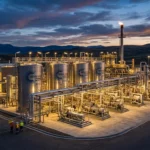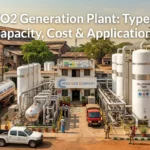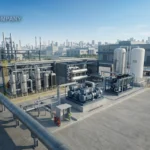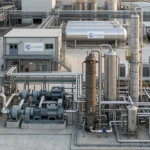
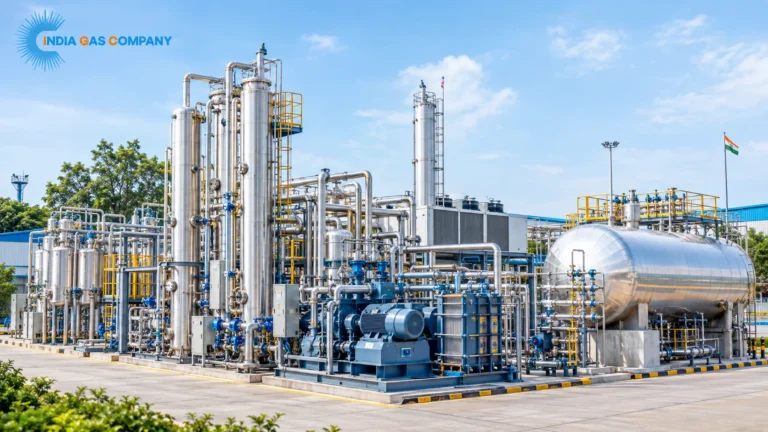

The demand for reliable and cost-effective carbon dioxide (CO₂) is increasing across industries such as food and beverage, breweries, distilleries, ethanol manufacturing, biogas, CBG, pharmaceuticals, chemicals, cold-chain operations, welding, greenhouses, and dry ice production.
For industries that generate CO₂ as a by-product or have access to a suitable CO₂-rich gas stream, installing a dedicated recovery or production facility can provide an opportunity to convert an otherwise underutilized gas stream into a valuable industrial product.
A professional CO2 plant manufacturer helps industries design, manufacture, install, commission, and maintain complete CO₂ recovery and CO₂ production systems according to their feed-gas characteristics, required capacity, purity, pressure, and end-use application.
For businesses looking for a reliable CO2 plant supplier India, the selection of the right technology partner is equally important. A CO₂ plant is not simply a collection of compressors, vessels, condensers, and storage tanks. It is an integrated process system in which gas purification, compression, drying, cooling, liquefaction, storage, instrumentation, and safety systems must work together efficiently.
This article explains how CO₂ recovery and production plants work, the major equipment involved, technical considerations, applications, benefits, and how industries can select the right CO2 plant manufacturer for their project.
What Is a CO₂ Recovery Plant?
A CO₂ recovery plant is an industrial system designed to capture carbon dioxide from a CO₂-rich gas stream, purify it, compress it, dry it, liquefy it, and store it for subsequent use.
Several industries generate substantial quantities of CO₂ during their production processes. For example, fermentation-based industries can generate CO₂ as a process by-product. Biogas upgrading facilities can also produce a concentrated CO₂ stream after methane separation.
Instead of venting the CO₂ into the atmosphere or purchasing CO₂ from an external supplier, an industry can install a CO₂ recovery system and utilize the available gas as a commercial or captive resource.
A typical recovery process consists of:
CO₂-rich gas → Gas collection → Scrubbing/Pretreatment → Purification → Compression → Drying → Cooling/Liquefaction → Storage
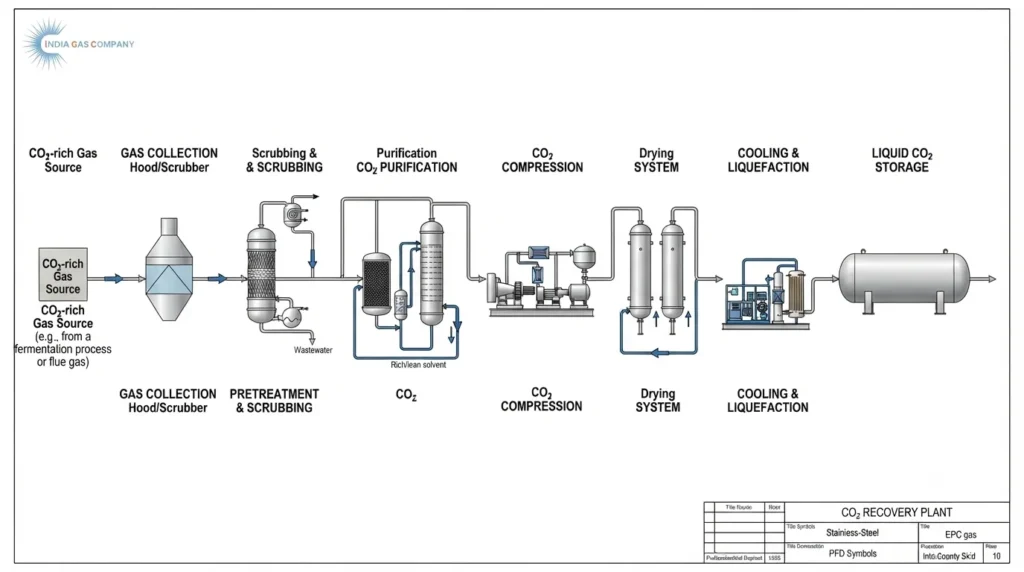
The exact process configuration depends on the source and composition of the feed gas.
CO2 Plant Manufacturer – Designing a Plant According to Your Requirement
A competent CO2 plant manufacturer begins the project by understanding the customer’s process rather than simply recommending a standard machine.
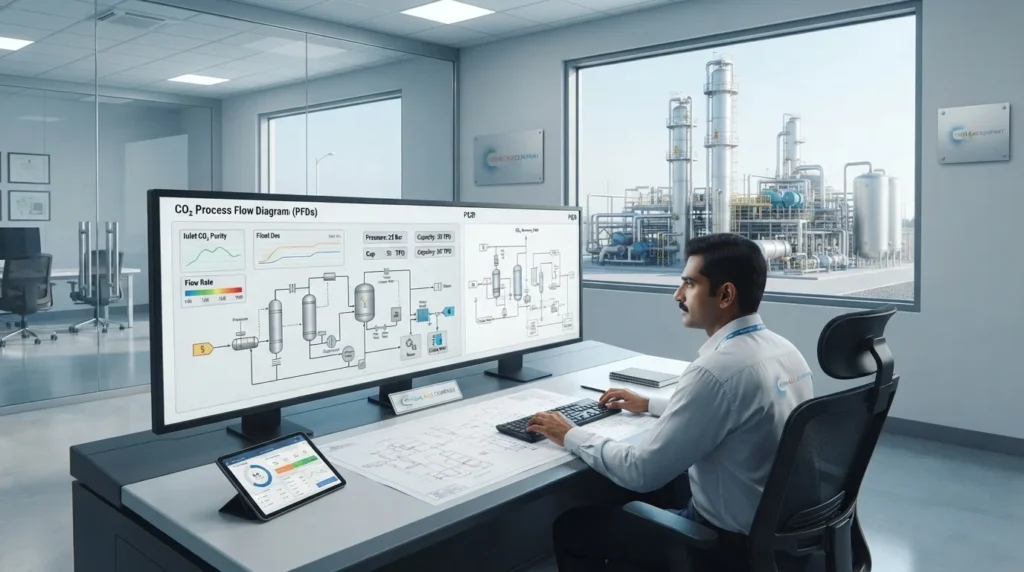
Important engineering inputs include:
- Source of CO₂
- Feed-gas composition
- CO₂ concentration
- Gas flow rate
- Available feed-gas pressure
- Required CO₂ purity
- Required production capacity
- Final product requirement
- Liquid CO₂ requirement
- Storage requirement
- Dry ice requirement, if applicable
- Available utilities
- Site conditions
- Electrical power availability
- Cooling-water availability
- Ambient conditions
- Automation requirements
Feed-gas analysis is particularly important. Contaminants such as moisture, hydrocarbons, oxygen, nitrogen, sulfur compounds, volatile compounds, and other impurities can affect the purification and liquefaction process.
Therefore, the equipment configuration should be engineered based on actual gas analysis and application requirements.
CO2 Plant Supplier India – Turnkey Solutions for Industrial CO₂ Projects
Industries searching for a CO2 plant supplier India should ideally work with a company capable of providing an end-to-end solution rather than purchasing individual components from different vendors.
A turnkey CO₂ plant solution can include:
- Process engineering
- Plant capacity calculation
- Equipment selection
- Detailed engineering
- Equipment manufacturing
- Skid fabrication
- Piping
- Electrical systems
- Instrumentation
- PLC/automation
- Installation
- Testing
- Commissioning
- Operator training
- Preventive maintenance
- Spare-parts support
A turnkey approach gives the customer a single technical point of responsibility and can simplify project execution.
How Does a CO₂ Recovery Plant Work?
The operating principle of a CO₂ recovery plant can be divided into several stages.
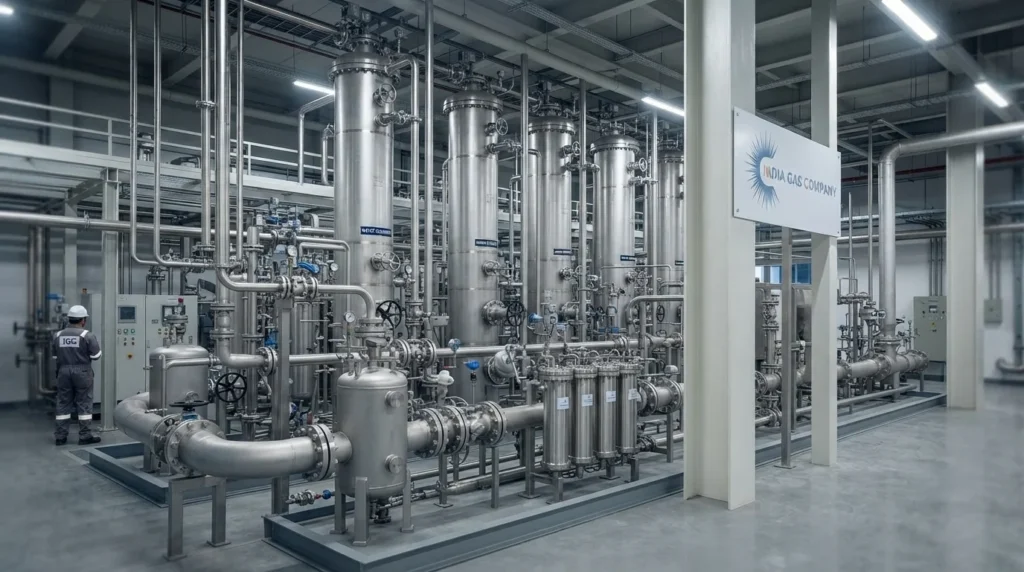
1. CO₂ Gas Collection
The process starts with collecting CO₂-rich gas from the industrial process.
The gas source may be:
- Fermentation
- Ethanol production
- Brewery operations
- Biogas upgrading
- Other industrial processes producing CO₂-rich gas
The gas is transferred to the recovery system through suitable piping and gas-handling equipment.
2. Gas Scrubbing and Pretreatment
Before compression, the gas may require pretreatment to remove entrained liquids, particulate matter, and other contaminants.
Depending on the feed gas, the system may include scrubbers, filters, separators, demisters, or other purification equipment.
Proper pretreatment protects downstream compressors and improves the reliability of the complete plant.
3. CO₂ Purification
Purification is one of the most important stages of the process.
The objective is to remove impurities that could affect the quality of the final CO₂ product or interfere with compression and liquefaction.
The purification system is selected according to the composition of the incoming gas.
4. CO₂ Compression
After purification, the CO₂ gas is compressed through a suitable compressor system.
Compression increases the gas pressure to levels required for downstream processing.
An appropriately designed CO2 compressor should provide reliable operation while maintaining acceptable energy consumption, discharge temperature, vibration, and maintenance requirements.
5. CO₂ Drying
Moisture must be controlled before liquefaction and storage.
A CO₂ drying system removes residual moisture from the compressed gas. Depending on the process design, suitable drying technology such as adsorption-based systems may be incorporated.
Effective drying helps prevent operational problems associated with moisture during cooling and liquefaction.
6. CO₂ Liquefaction
The purified and dried CO₂ is cooled under controlled pressure and temperature conditions until it reaches the required liquid phase.
The liquefaction section generally involves heat exchangers, refrigeration equipment, condensers, controls, and associated process equipment.
7. Liquid CO₂ Storage
Once liquefied, CO₂ can be transferred to an insulated storage tank.
The storage system must be designed according to the required inventory, operating conditions, safety requirements, and dispatch method.
Liquid CO₂ can subsequently be supplied to customers or transferred to applications such as dry ice production.
CO₂ Production Plant vs CO₂ Recovery Plant
Although the terms are sometimes used interchangeably, CO₂ production and CO₂ recovery can refer to different process configurations.
| Parameter | CO₂ Recovery Plant | CO₂ Production Plant |
| Main purpose | Recover existing CO₂ | Generate/produce CO₂ |
| CO₂ source | CO₂-rich process gas | Dedicated feed/process |
| Feed requirement | Suitable CO₂-rich gas | Raw material/process dependent |
| Purification | Required | Required |
| Compression | Generally required | Generally required |
| Drying | Required as applicable | Required as applicable |
| Liquefaction | Depending on application | Depending on application |
| Storage | Liquid CO₂ storage where required | Liquid CO₂ storage where required |
| Application | Captive use/commercial sale | Captive use/commercial sale |
The correct solution depends on the customer’s process and the source of CO₂.
CO2 Plant Technical Specifications
The technical specifications of a CO₂ plant should always be finalized according to the feed-gas analysis and customer requirements. A professional CO2 plant manufacturer should therefore prepare the final technical offer after evaluating the process conditions.
Important technical parameters include:
| Technical Parameter | Specification/Consideration |
| CO₂ source | Fermentation, ethanol, biogas or other suitable source |
| Feed-gas composition | To be established through gas analysis |
| CO₂ concentration | Based on actual feed gas |
| Plant capacity | Selected according to required CO₂ output |
| CO₂ purity | Application-specific |
| Feed pressure | Based on source process |
| Compression system | Industrial CO₂ compressor package |
| Purification | Application-specific purification train |
| Drying | Moisture-removal system |
| Liquefaction | Refrigeration-based CO₂ liquefaction system |
| Storage | Insulated liquid CO₂ storage system |
| Control system | PLC-based automation where specified |
| Instrumentation | Pressure, temperature, level and process monitoring |
| Safety | Relief systems, alarms and emergency protection |
| Utilities | Power, cooling and other requirements based on design |
| Installation | Site-specific |
| Commissioning | Testing and performance verification |
Note: Actual capacity, purity, pressure, temperature, compressor configuration, electrical load, refrigeration capacity, storage volume, and utility consumption should be specified in the project-specific technical datasheet. These values vary significantly depending on the CO₂ source and plant design.
Major Equipment Used in a CO₂ Recovery Plant
A modern CO₂ recovery system consists of multiple interconnected components.
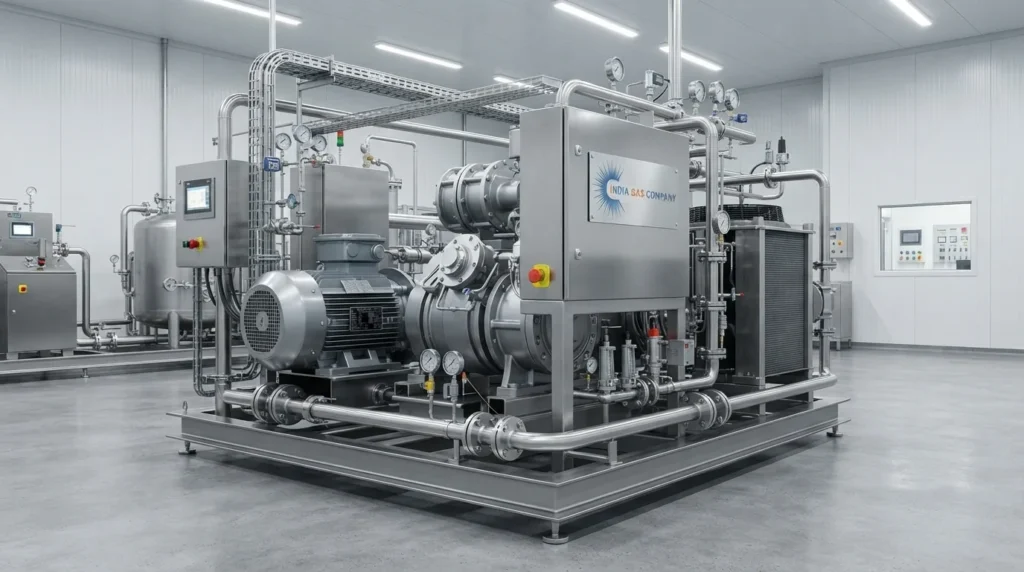
CO₂ Compressor
The compressor is responsible for increasing CO₂ pressure for downstream purification, drying, and liquefaction.
Compressor selection depends on:
- Gas flow
- Suction pressure
- Discharge pressure
- Required capacity
- Gas temperature
- Operating hours
- Cooling arrangement
- Application
Scrubber and Separator
Scrubbers and separators help remove liquid carryover and contaminants from the gas stream. They also protect downstream equipment from unwanted liquid ingress.
Purification System
The purification section removes contaminants from the CO₂ stream. The exact configuration depends on the source gas and the required product specification.
CO₂ Dryer
The dryer reduces moisture content in the CO₂ gas before the liquefaction stage.
Heat Exchanger
Heat exchangers are used for controlled heating and cooling of process streams and play an important role in the overall thermal integration of the plant.
Condenser/Liquefaction System
The liquefaction section converts purified and dried gaseous CO₂ into liquid CO₂ under controlled process conditions.
Refrigeration System
A refrigeration package provides the cooling duty necessary for the liquefaction process.
Liquid CO₂ Storage Tank
The storage tank holds the recovered or produced liquid CO₂ before dispatch, filling, or further processing.
Control and Automation
PLC-based controls, instrumentation, alarms, interlocks, pressure monitoring, temperature monitoring, and level controls can be integrated into the plant.
Applications of CO₂ Recovery and Production Plants
CO₂ is a versatile industrial gas and has applications across numerous sectors.
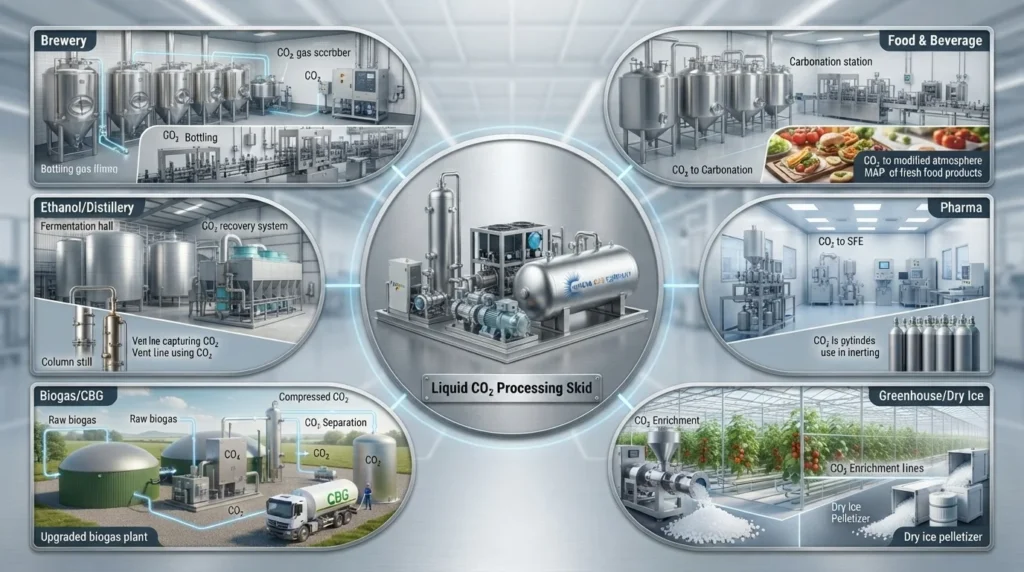
Food and Beverage Industry
CO₂ is used in carbonated beverages, modified-atmosphere packaging, food processing, chilling, and related applications.
Breweries
Fermentation can generate CO₂ that may be captured, purified, liquefied, and reused. This provides breweries with an opportunity to reduce dependence on externally purchased CO₂.
Ethanol and Distillery Plants
Fermentation in ethanol manufacturing can produce significant quantities of CO₂. A properly designed recovery system can capture this gas and convert it into a usable product.
Biogas and CBG Plants
Biogas upgrading separates methane from CO₂ and other components. The separated CO₂ stream may be suitable for further treatment and recovery, subject to gas composition and purification requirements.
This creates an important opportunity for integrated CO2 recovery plant projects alongside biogas and CBG facilities.
Pharmaceutical Industry
High-purity CO₂ can have applications in pharmaceutical and healthcare-related processes, subject to the relevant product-quality requirements.
Chemical Industry
CO₂ is used as an industrial feedstock and process gas in several chemical applications.
Greenhouses
CO₂ enrichment can be used in controlled agricultural environments to support plant growth, subject to appropriate controls and operating practices.
Dry Ice Manufacturing
Liquid CO₂ can be further processed into dry ice for applications including food transportation, cold-chain logistics, industrial cleaning, and temperature-controlled shipments.
Benefits of Installing a CO₂ Recovery Plant
Installing a CO₂ recovery system can provide several potential advantages.
Reduced External CO₂ Purchases
Industries generating suitable CO₂-rich gas can potentially reduce their dependence on third-party CO₂ suppliers.
Better Utilization of Process Gas
Instead of treating CO₂ as a waste stream, companies can recover and utilize it as a valuable industrial product.
Captive CO₂ Availability
A captive system can provide greater control over CO₂ availability for operations that require a consistent supply.
Potential Revenue Opportunity
Where production exceeds captive consumption, the surplus liquid CO₂ may potentially be supplied to other customers, subject to applicable quality, regulatory, logistics, and commercial requirements.
Integration with Dry Ice Production
A liquid CO₂ system can potentially be integrated with downstream dry ice manufacturing equipment.
Improved Resource Efficiency
CO₂ recovery can form part of a broader industrial resource-utilization strategy, particularly in fermentation, ethanol, biogas, and related industries.
CO2 Plant Supplier India – How to Select the Right Company
Selecting the right CO2 plant supplier India is an important decision because the plant’s performance depends on correct process engineering as much as equipment quality.
Before finalizing a supplier, evaluate the following:
1. Technical Capability
Check whether the supplier understands CO₂ purification, compression, drying, liquefaction, storage, and associated process engineering.
2. Customized Design
The plant should be designed according to the customer’s feed-gas analysis and production requirements.
3. Equipment Quality
Compressors, valves, pressure vessels, heat exchangers, refrigeration systems, instruments, and other components should be selected according to appropriate engineering requirements.
4. Automation
Modern plants benefit from appropriate instrumentation and automation for monitoring and controlling critical process parameters.
5. Installation and Commissioning
The supplier should have the capability to support installation, testing, commissioning, and operator training.
6. After-Sales Service
CO₂ plants are long-term industrial assets. Spare parts, preventive maintenance, troubleshooting, and technical support should therefore be considered during vendor selection.
CO₂ Plant Installation Process
A professional CO2 plant manufacturer generally follows a structured project execution process.
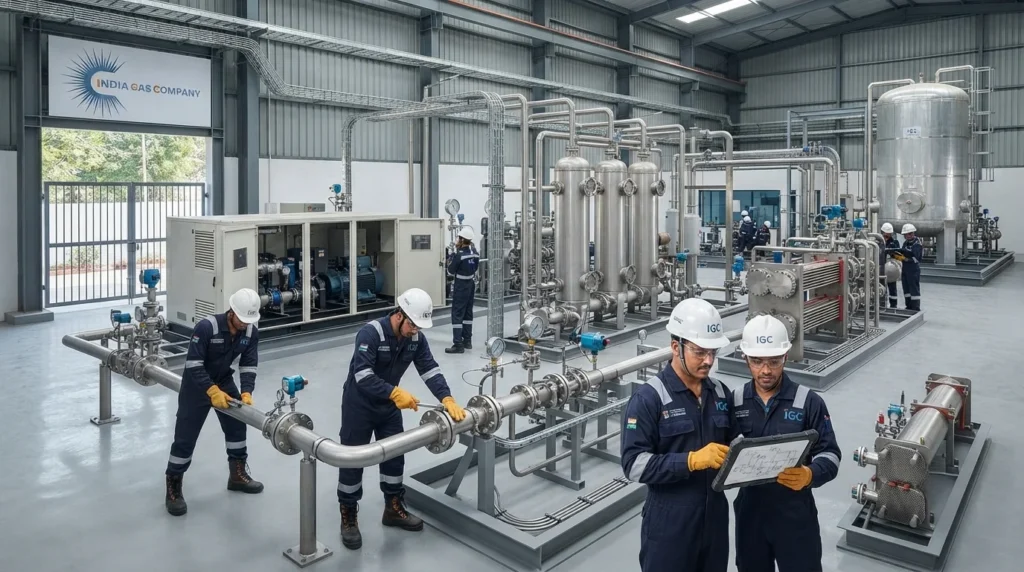
Step 1 – Requirement Assessment
Understand the customer’s CO₂ source, capacity, application, and site conditions.
Step 2 – Feed-Gas Analysis
Analyze the composition of the available gas stream.
Step 3 – Process Design
Develop the appropriate recovery, purification, compression, drying, liquefaction, and storage configuration.
Step 4 – Technical Proposal
Provide the customer with the proposed capacity, equipment configuration, utilities, scope of supply, and commercial proposal.
Step 5 – Manufacturing and Procurement
Manufacture or procure the major plant equipment.
Step 6 – Installation
Install mechanical, electrical, piping, instrumentation, and automation systems.
Step 7 – Commissioning
Conduct testing and commission the plant under controlled operating conditions.
Step 8 – Performance Verification
Verify plant performance against agreed project parameters.
Step 9 – Operator Training
Train the customer’s operating and maintenance personnel.
CO₂ Plant Cost – What Determines the Investment?
The cost of a CO₂ plant cannot be accurately determined from capacity alone.
A CO2 plant manufacturer normally considers multiple variables, including:
- CO₂ feed-gas concentration
- Required production capacity
- Product purity
- Feed-gas pressure
- Compression requirements
- Purification technology
- Drying technology
- Refrigeration capacity
- Liquid CO₂ storage capacity
- Automation level
- Electrical requirements
- Civil work
- Piping
- Installation
- Transportation
- Site conditions
- Safety systems
- Customer-specific requirements
For this reason, companies should request a detailed technical-commercial proposal rather than comparing vendors purely on quoted project price.
A lower initial price may not necessarily represent the lowest total cost of ownership. Energy consumption, maintenance requirements, compressor efficiency, spare-part availability, plant reliability, and after-sales support can significantly affect long-term operating economics.
Safety Considerations for CO₂ Plants
CO₂ plants involve pressurized gas and liquid CO₂ systems and therefore require appropriate engineering and safety measures.
Important considerations include:
- Pressure relief systems
- Appropriate pressure-rated equipment
- CO₂ leak detection
- Adequate ventilation
- Emergency shutdown systems
- Process alarms
- Pressure and temperature monitoring
- Safe storage arrangements
- Proper piping design
- Operator training
- Preventive maintenance
- Appropriate PPE and operating procedures
CO₂ is colorless and odorless, and elevated concentrations can create an oxygen-displacement hazard. Consequently, proper ventilation, gas detection, alarm systems, and operating procedures are important in areas where CO₂ can accumulate.
Safety requirements should be finalized during detailed engineering according to the plant configuration, applicable Indian regulations, relevant standards, and site conditions.
Why Choose an Experienced CO2 Plant Manufacturer?
A CO₂ plant is a process-engineering project rather than a single piece of machinery. The quality of engineering can influence plant efficiency, product quality, reliability, maintenance requirements, and operating costs.
An experienced CO2 plant manufacturer can support customers through the complete project lifecycle—from initial feasibility assessment and feed-gas evaluation to engineering, manufacturing, installation, commissioning, and after-sales support.
For industrial customers, the ideal CO2 plant supplier India should be capable of understanding the customer’s process and delivering a solution that is technically appropriate for the intended application.
Whether the requirement is a CO₂ recovery plant for a brewery, ethanol plant, distillery, biogas/CBG facility, or another industrial process, the project should begin with a detailed assessment of the available gas stream.
Conclusion: Choose the Right CO2 Plant Supplier India for Your Project
CO₂ recovery and production are becoming increasingly relevant for industries looking to improve resource utilization, establish captive CO₂ availability, and potentially create additional commercial opportunities from CO₂-rich process streams.
From gas collection and purification to compression, drying, liquefaction, storage, and final utilization, every stage of the process needs to be properly engineered.
Choosing an experienced CO2 plant manufacturer can help businesses develop a plant around their actual process requirements rather than relying on a generic configuration.
If you are searching for a CO2 plant supplier India for a new project, expansion, or modernization of an existing CO₂ recovery facility, the first step should be a technical evaluation of your CO₂ source, gas composition, required capacity, purity, storage requirement, and intended application.
A properly engineered CO₂ recovery or production plant can become an important part of an industrial gas strategy, particularly for breweries, ethanol and distillery plants, biogas and CBG projects, food and beverage companies, chemical industries, and other facilities with a suitable CO₂ requirement or CO₂-rich process stream.
Looking to set up a CO₂ recovery or CO₂ production plant? Discuss your feed-gas source, required capacity, purity, storage requirement, and application with our technical team to determine the appropriate plant configuration and project scope.
Get a CO₂ Plant Feasibility & Technical Consultation
Call or WhatsApp: +91 89710 91010 or Drop an Email: info@indiagascompany.com
You May Like:
🔗 Buy Liquid CO2 in Bangalore – High-Purity Liquid Carbon Dioxide Supplier
🔗 CO2 Recovery Plant Setup: A Complete Technical Guide