
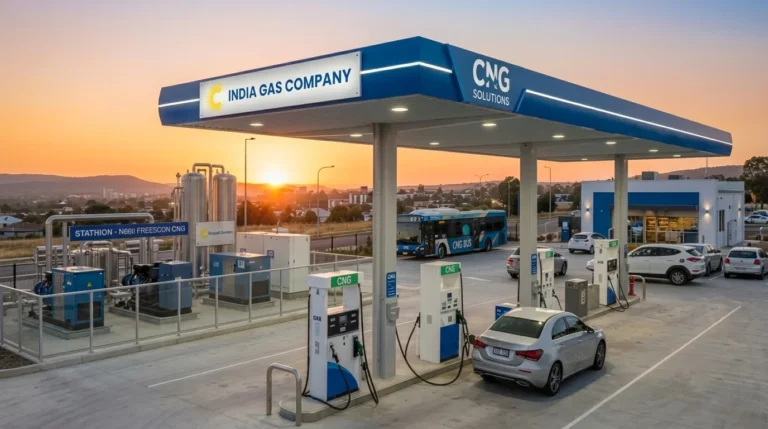

The push toward cleaner fuels have never been stronger, and Compressed Natural Gas (CNG) sits right at the centre of that shift. Transport fleets, industrial units, and even municipal corporations are moving away from diesel and petrol, and this is exactly why a well-planned CNG plant setup has become one of the most sought-after infrastructure investments in the energy sector today.
Whether you are an entrepreneur eyeing the retail fuel business, an industrial unit looking to switch to a cleaner energy source, or an investor exploring the gas value chain, understanding how a CNG plant works – its types, capacities, costs, and applications – is the first step before you approach any CNG plant manufacturer for execution.
This article walks you through everything you need to know about CNG plant setup, so you can make an informed decision before starting your project.
What is a CNG Plant?
A CNG plant is a facility that compresses natural gas to a pressure of around 200-250 bar, converting it into a form that can be stored and dispensed as vehicle fuel or used for industrial applications.
The gas is sourced either from the city gas distribution (CGD) network, directly from a gas pipeline, or in the case of CNG recovery plants, recovered from biogas, landfill gas, or associated petroleum gas that would otherwise be flared or wasted.
A proper CNG plant setup is not just about installing a compressor. It is an integrated system involving gas metering, filtration, drying, compression, storage cascades, dispensing units, and safety systems, all working together to deliver a consistent and safe supply of compressed gas.
This is why the process demands technical expertise and why choosing the right CNG plant manufacturer plays such a decisive role in the long-term success of the project.
Why CNG Plant Setup is Gaining Momentum in India and Beyond?
Several factors are driving the rising demand for CNG plant setup projects across the country:
- Government push for cleaner fuel: Expanding city gas distribution networks and stricter emission norms are encouraging both public and private players to invest in CNG infrastructure.
- Lower running cost for fleet operators: CNG remains significantly cheaper than petrol and diesel, making it attractive for public transport, logistics, and cab aggregators.
- Industrial fuel switching: Many factories are replacing furnace oil and LPG with natural gas for boilers, kilns, and heating applications, creating demand for industrial CNG plant setup.
- Waste-to-energy initiatives: CNG recovery plants that convert biogas from agricultural waste, dairy farms, and municipal solid waste into vehicle-grade fuel are opening a completely new revenue stream.
- Green mobility corridors: Highway corridors are being mapped for new CNG stations to support the growing number of CNG vehicles on the road.
All these trends point to one thing – a properly executed CNG plant setup is a business opportunity with strong long-term returns, provided it’s built with the right technology and by an experienced CNG plant manufacturer.
Types of CNG Plant Setup
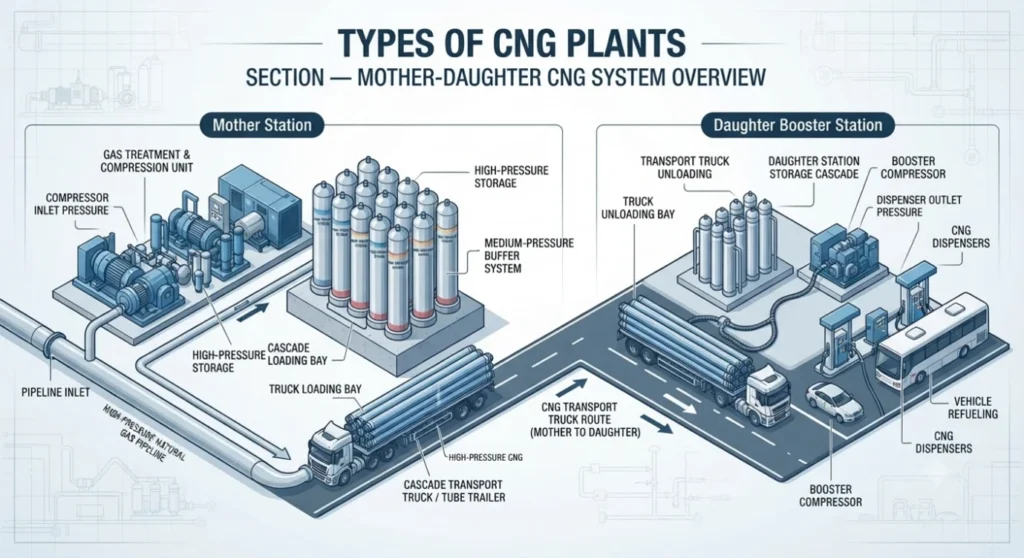
Not every CNG plant is built the same way. The right type depends on gas availability, location, target customer base, and budget. Here are the primary types of CNG plant setup used across the industry.
1. Online CNG Plant Setup
An online CNG plant is directly connected to the natural gas pipeline network. Gas flows continuously from the pipeline into the compression unit, gets compressed, and is dispensed immediately to vehicles or industrial consumers. This is the most common and cost-efficient type of CNG plant setup because it eliminates the need for gas transportation.
Best suited for: Locations with direct access to a city gas distribution pipeline, typically urban and semi-urban fuel stations.
2. Online Cascade / Mother CNG Plant Setup
A Mother CNG plant is essentially a large online plant that compresses gas at a high capacity and stores it in cascades (a series of high-pressure cylinders) for transportation to locations without direct pipeline access. This type of CNG plant setup acts as the supply hub for a network of daughter booster stations.
Best suited for: Regions where the gas grid hasn’t reached every locality but demand for CNG exists.
3. Daughter Booster CNG Plant Setup
Daughter Booster Stations receive compressed gas transported from mother stations via cascades, then re-pressurize (boost) it before dispensing to vehicles. This is a smart CNG plant setup model for areas outside the pipeline network, letting fuel retailers extend the CNG distribution reach without laying new pipeline infrastructure.
Best suited for: Semi-urban and rural fuel outlets, highway stations away from the gas grid.
4. Mother-Daughter CNG Plant Setup (Combined Model)
This hybrid CNG plant setup combines the mother station’s high compression capacity with a network of daughter stations, giving fuel retail chains a scalable and flexible distribution model. It’s popular among businesses planning multiple retail outlets under a single supply chain.
5. CNG Recovery Plant Setup (Biogas to CNG)
CNG recovery plants are designed to purify and compress biogas, landfill gas, or associated gas from oil fields into vehicle-grade or grid-quality CNG. The process typically involves scrubbing out CO₂, H₂S, and moisture from raw biogas before compression. This type of CNG plant setup is increasingly popular among dairy farms, sugar mills, municipal waste management projects, and industrial units looking to monetize their waste gas streams instead of flaring it.
Best suited for: Agro-industrial units, dairy and poultry farms, municipal solid waste plants, and sugar mills with a consistent biogas source.
6. Industrial CNG Plant Setup
Many industries such as ceramics, glass, textiles, food processing, and pharmaceuticals, require a steady natural gas supply for boilers, furnaces, and process heating.
An industrial CNG plant setup is customized based on the plant’s consumption pattern, pressure requirements, and safety standards specific to that industry.
Key Components involved in CNG Plant Setup
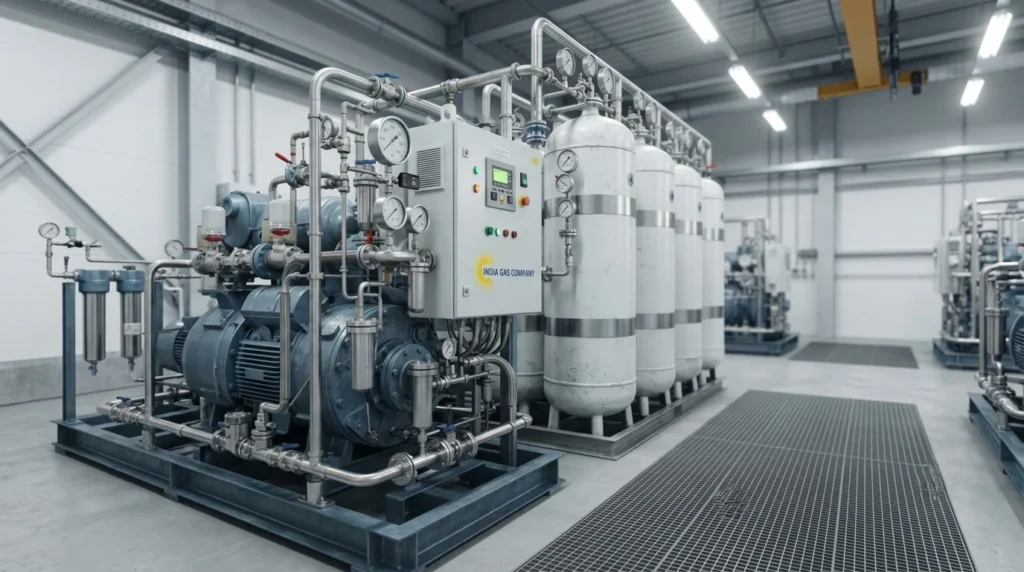
Regardless of the type you choose, every CNG plant setup typically involves the following components:
- Gas Metering Skid – measures the volume of incoming natural gas accurately for billing and monitoring.
- Filtration and Scrubbing Unit – removes moisture, dust particles, and impurities (critical for recovery plants dealing with biogas).
- Gas Compressor – the heart of any CNG plant, compressing gas to 200–250 bar; capacity and staging depend on plant size.
- Cascade Storage System – high-pressure cylinders that store compressed gas for dispensing or transportation.
- Dispensing Units – deliver compressed gas to vehicles at retail stations, complete with automated billing systems.
- Priority Panel (for Mother-Daughter setups) – manages gas flow priority between direct dispensing and cascade filling.
- Safety and Control Systems – gas leak detectors, pressure relief valves, fire suppression systems, and SCADA-based monitoring.
- Civil and Electrical Infrastructure – foundation work, canopy structures, power supply, and earthing systems designed per safety norms.
A reliable CNG plant manufacturer will handle the design and integration of all these components as a single turnkey package rather than leaving you to coordinate with multiple vendors.
CNG Plant Setup Capacity: Choosing the Right Size
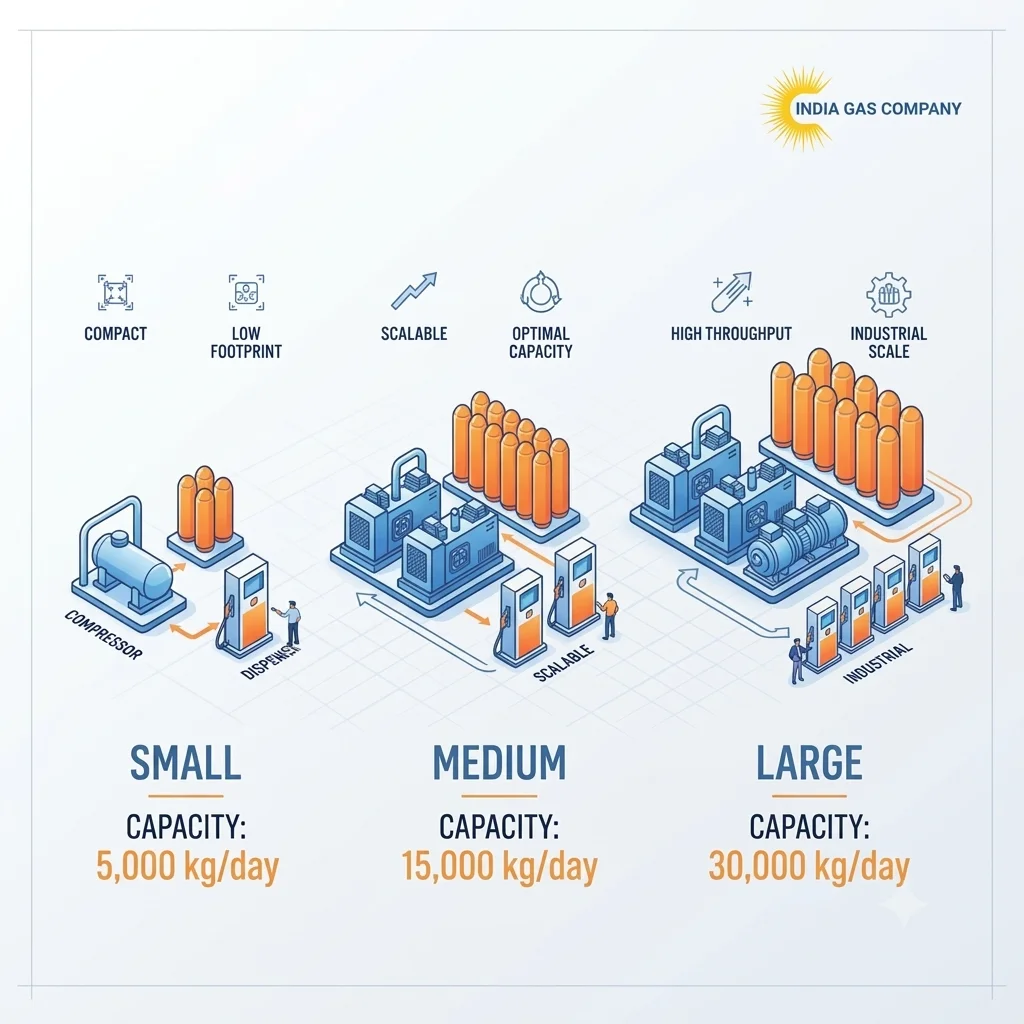
One of the most important decisions in CNG plant setup is choosing the right capacity. Capacity is generally measured in terms of gas compression volume per hour, often expressed in SCMH (Standard Cubic Meters per Hour) or in terms of daily dispensing capacity in kilograms.
Small Capacity CNG Plant Setup (up to 1,000-2,000 kg/day)
Ideal for standalone retail outlets in semi-urban areas or small daughter booster stations with moderate vehicle footfall. This size of CNG plant setup requires lower capital investment and is a good entry point for new fuel retailers.
Medium Capacity CNG Plant Setup (2,000-5,000 kg/day)
Suitable for busy urban fuel stations, highway outlets with consistent traffic, or industrial units with moderate gas consumption. This is one of the most commonly chosen capacities for a CNG plant setup because it balances investment with steady returns.
Large Capacity / Mother Station CNG Plant Setup (5,000 kg/day and above)
Designed for high-traffic urban corridors, fleet refuelling hubs, or as a mother station supplying multiple daughter stations. This scale of CNG plant setup demands significant compression capacity, larger cascade storage, and stronger safety infrastructure.
Capacity for CNG Recovery Plants
For CNG recovery plants, capacity is planned around the volume of raw biogas available, commonly ranging from smaller farm-based units producing a few hundred kilograms per day to large municipal or industrial recovery plants producing several thousand kilograms per day.
Choosing the correct capacity requires a proper feasibility study of vehicle traffic, gas availability, and future demand growth, something an experienced CNG plant manufacturer can help assess before finalizing the design.
Cost of CNG Plant Setup: What Determines the Price?
The cost of a CNG plant setup varies widely depending on plant type, capacity, and location. Here are the major factors that influence the overall investment:
- Type of Plant: An online CNG plant setup connected directly to the pipeline is generally more economical than a mother-daughter model, which requires cascade trucks and additional compression stages.
- Compression Capacity: Larger capacity compressors with higher throughput naturally cost more, both in equipment and installation.
- Land and Civil Work: Site development, foundation, canopy structure, and drainage systems add to the base cost of any CNG plant setup, and this can vary depending on soil conditions and local construction rates.
- Storage Cascade Requirement: Daughter booster stations and mother stations need extra cascade cylinders for gas transport and storage, adding to the equipment cost.
- Automation and Control Systems: SCADA-based monitoring, automated dispensing, and remote diagnostics increase upfront cost but reduce operational risk and manpower dependency over the plant’s lifetime.
- Safety Compliance: Fire safety systems, gas leak detection, PESO or OISD compliant design, and electrical safety measures are non-negotiable and form a substantial part of the investment.
- Recovery Plant Processing Units: For CNG recovery plants, the biogas purification system (CO₂ and H₂S removal, drying units) adds a distinct cost layer not present in a standard online CNG plant setup.
- After-sales Service and AMC: Ongoing maintenance contracts, spare parts availability, and manufacturer support impact the long-term cost of ownership, even if they don’t show up in the initial quote.
Because so many variables are involved, it’s advisable to get a detailed, site-specific quotation rather than relying on general estimates.
A transparent CNG plant manufacturer will break down these costs clearly instead of bundling them into a vague lump-sum figure, this transparency is often the biggest differentiator between manufacturers in this space.
Step-by-Step Process of CNG Plant Setup
A structured approach to CNG plant setup reduces delays and cost overruns. Here’s how a typical project unfolds:
Step 1: Feasibility Study Assessing gas availability, land suitability, vehicle traffic (for retail) or gas consumption pattern (for industrial/recovery plants), and regulatory approvals required.
Step 2: Plant Design and Engineering Finalizing the type of CNG plant setup – online, mother-daughter, or recovery-based – along with capacity, compressor specifications, and layout planning.
Step 3: Statutory Approvals Securing clearances from PESO (Petroleum and Explosives Safety Organisation), local fire department, pollution control board, and gas supply agreements with the CGD entity or biogas source.
Step 4: Civil and Infrastructure Work Site preparation, foundation casting, canopy erection, drainage, and electrical work.
Step 5: Equipment Procurement and Installation Sourcing compressors, dispensers, cascades, metering skids, and safety systems from the chosen CNG plant manufacturer, followed by installation and integration.
Step 6: Testing and Commissioning Pressure testing, leak testing, safety system checks, and trial runs before the plant goes live.
Step 7: Operator Training and Handover Training the operations team on daily processes, safety protocols, and maintenance schedules.
Step 8: Ongoing Maintenance Routine servicing, compressor overhauls, and safety audits to keep the plant running efficiently over its operational life.
Applications of CNG Plants
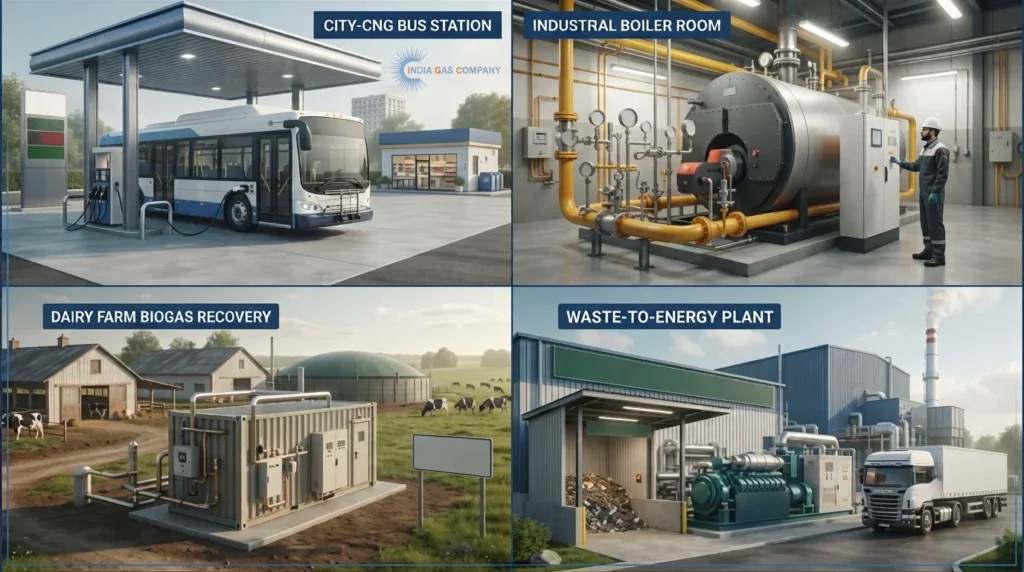
The applications of a CNG plant setup extend well beyond just fuelling cars and buses. Here’s a broader look at where CNG plants are being used today:
1. Retail Vehicle Fuelling
The most visible application, CNG stations dispensing fuel to private cars, autos, taxis, and buses. This remains the largest driver of new CNG plant setup projects across the country.
2. Public Transport and Fleet Operations
State transport corporations and private fleet operators are increasingly converting their bus and cab fleets to CNG, requiring dedicated captive filling stations, often built as a customized CNG plant setup within depot premises.
3. Industrial Fuel Supply
Factories using furnace oil, LPG, or coal for heating processes are switching to piped natural gas via an industrial CNG plant setup, cutting emissions and fuel costs simultaneously.
4. Agricultural and Dairy Waste-to-Energy
Farms and dairies are setting up CNG recovery plants to convert cattle dung and organic waste into biogas, then purify and compress it into usable CNG – turning a waste management problem into a fuel and revenue source.
5. Municipal Solid Waste Management
Urban local bodies are exploring CNG recovery plant setup to process municipal solid waste, generating fuel for garbage collection vehicles and city buses while reducing landfill dependency.
6. Marine and Rail Applications
Emerging applications include CNG/LNG dual-fuel systems for inland waterway vessels and rail shunting operations, indicating where the CNG plant setup market may expand next.
7. Power Backup and Captive Generation
Some industrial and commercial establishments use compressed natural gas as fuel for generators, offering a cleaner alternative to diesel gensets.
Choosing the Right CNG Plant Manufacturer
Given how much technical precision and regulatory compliance is involved, selecting the right CNG plant manufacturer is arguably the most important decision in this entire process. Here’s what to evaluate before signing a contract:
- Track record and project history: How many plants has the manufacturer actually commissioned, and in what capacities?
- In-house engineering capability: Does the manufacturer design and manufacture compressors, dispensers, and cascades themselves, or simply assemble third-party parts?
- Compliance knowledge: Is the manufacturer familiar with PESO, OISD, and fire safety norms applicable to your state and plant type?
- Turnkey capability: Can they handle everything from feasibility study to civil work, installation, and commissioning, or will you need to coordinate multiple vendors?
- After-sales support: What does their AMC and spare parts availability look like once the plant is operational?
- Flexibility across plant types: Can the same manufacturer support online plants, mother-daughter setups, and CNG recovery plants, or do they specialize in just one?
This is exactly where experience starts to matter more than a low quotation. A CNG plant setup is a long-term infrastructure asset, and cutting corners at the manufacturer-selection stage often shows up as downtime, safety issues, or unplanned costs a few years down the line.
Where Experience Makes the Difference
This is a space where India Gas Company brings a track record worth mentioning – with over 23 years in the gas infrastructure business and more than 100 completed projects across online, mother-daughter, and CNG recovery plant categories.
That kind of experience means fewer surprises during statutory approvals, more accurate capacity planning, and a design that’s already been stress-tested across dozens of real-world sites – the kind of dependability that matters when you’re committing capital to a facility meant to run for decades.
For businesses evaluating multiple CNG plant manufacturer options, it’s worth asking each one the same question: how many plants have you actually built, and can you show them? The answer tends to separate manufacturers who are still learning from those, like India Gas Company, who’ve already solved the common problems before they show up on your site.
Common Mistakes to Avoid During CNG Plant Setup
Even with the right manufacturer, a few planning mistakes can affect the outcome of a CNG plant setup:
- Underestimating future demand: Choosing a capacity that only meets current traffic without room for growth often leads to premature upgrades.
- Ignoring gas source reliability: For recovery plants especially, an inconsistent biogas supply can affect daily output significantly.
- Skipping detailed feasibility studies: Rushing into land acquisition or civil work before confirming gas availability and regulatory clearances can cause costly delays.
- Overlooking after-sales support: Choosing a manufacturer purely on upfront price without checking maintenance support can increase long-term operating costs.
- Inadequate safety planning: Cutting corners on fire safety and leak detection systems is a risk that simply isn’t worth taking, given the nature of compressed gas.
Conclusion
A CNG plant setup is a significant but rewarding investment, whether you’re entering the retail fuel business, switching your industrial unit to cleaner fuel, or building a CNG recovery plant to monetize waste gas.
The right decision depends on understanding the type of plant that fits your gas source and customer base, choosing an appropriate capacity, budgeting realistically for the true cost involved, and – perhaps most importantly – partnering with a CNG plant manufacturer who brings proven experience to the table.
With the natural gas sector expanding rapidly and government policy continuing to favour cleaner fuel adoption, now is a practical time to explore a CNG plant setup, provided it’s built on a solid technical and commercial foundation from day one.
You May Like:
🔗 CO2 Plant Manufacturer in India
🔗 CO2 Recovery Plant Setup: A Complete Technical Guide

1 thought on “CNG Plant Setup: Types, Capacity, Cost & Applications”